What Is Quiet BPD: The Silent Acting-In Struggle
Wondering what is quiet BPD—feeling calm on the outside while screaming on the inside? Quiet BPD (Borderline Personality Disorder) is often described as an “acting in” pattern, where intense emotions turn inward instead of showing up as loud conflict. You may seem high-functioning and dependable, yet privately struggle with shame, self-criticism, and fear of abandonment. Because the pain is hidden, others may miss it—and you may doubt yourself. This guide explains the concept, common signs, and practical ways to understand your patterns. It’s educational, not a diagnosis. If you want extra structure later, you can explore our bpd test online as a self-reflection tool.

Understanding the Core Concept: Acting In vs. Acting Out
To understand what is quiet BPD, you first need to understand the direction of the emotional energy. In the psychological community, this subtype is often referred to as Discouraged BPD. While the core emotional intensity is the same as classic BPD, the way it is processed is entirely different.
The Misconception of the Explosive Borderline
Most people—and even some older diagnostic manuals—focus on the acting out behaviors. This includes throwing things, screaming during conflicts, or impulsive public behavior. Because these signs are visible, they get diagnosed quickly. However, this creates a false narrative that if you aren't exploding, you don't have BPD.
Internalized Anger: When You Become Your Own Target
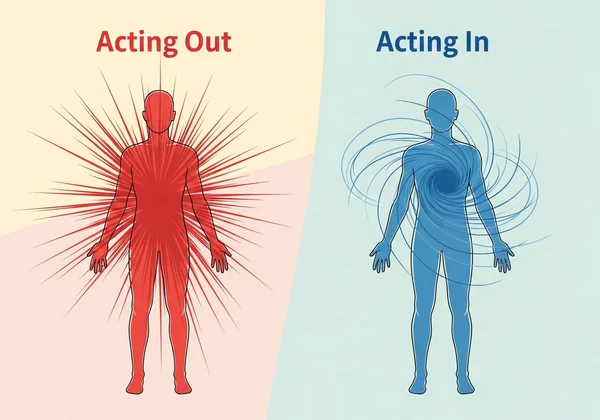
With Quiet BPD, the mechanism is acting in. You experience the same intense fear of abandonment, anger, and mood swings. However, instead of projecting that turmoil onto others, you direct it toward yourself.
- Acting Out: You hurt me, so I will yell at you.
- Acting In (Quiet): You hurt me, so I must be unlovable. I will isolate myself to punish myself.
This internalized anger is exhausting. You might hold it together all day at work (the high-functioning mask), only to collapse in exhaustion and self-loathing the moment you are alone.
4 Invisible Signs of Quiet BPD (Checklist)
Because these symptoms happen behind closed doors or inside your head, they are easy to miss. Use this checklist to see if these hidden behaviors align with your experience.
The High-Functioning Mask: Perfectionism as a Defense
You might be the person everyone relies on. You likely over-perform at work or school. This isn't just ambition; it's a survival strategy. You believe that if you are perfect, no one will reject you. The mask is heavy, and you live in constant fear that if you slip up, people will see the real, flawed you and leave.
Anatomy of an Episode: What the Internal Storm Feels Like
What does a quiet BPD episode look like? To an observer, it looks like silence. You might go quiet, stare into space, or say I'm fine. Inside, however, you are spiraling.
- Your heart races.
- Your thoughts race with self-criticism (I'm so stupid, Everyone hates me).
- You feel a physical heaviness in your chest.
- You dissociate (feel detached from your body) to numb the pain.

The Internal Monologue: What You Say vs. What You Think
One of the clearest indicators is the gap between your public words and private thoughts.
| What You Say Out Loud | What You Are Thinking |
|---|---|
| It's okay, I don't mind. | I am devastated, but if I say no, you will leave me. |
| I'm just tired. | I feel empty and hopeless. |
| Sorry, that was my fault. | Why do I always ruin everything? |
Physical Symptoms of Suppressed Emotion
Suppressing intense emotion takes a physical toll. You might struggle with chronic fatigue, unexplained headaches, or digestive issues. Your body is holding the tension that your voice isn't releasing.
Quiet BPD vs. Regular BPD: Key Differences
Understanding what is quiet BPD vs regular BPD (often called Classic or Impulsive BPD) helps clarify why you might not relate to standard descriptions of the disorder.
Implosion vs. Explosion: How Anger is Expressed
The primary difference is the direction of the split. In regular BPD, splitting often results in devaluing others (e.g., You are the worst person ever!). In Quiet BPD, you split on yourself (e.g., I am the worst person ever). You implode rather than explode.
The Difference in Self-Harm (Hidden vs. Visible)
While classic BPD self-harm might be impulsive and visible, Quiet BPD self-harm can be more subtle or hidden. This might look like:
- Starving yourself or binge eating.
- Substance abuse done in isolation.
- Sabotaging your own success or happiness.
- Negative self-talk so severe it paralyzes you.
The Favorite Person Dynamic in Quiet BPD
The concept of a Favorite Person (FP) is central to BPD, but in the quiet subtype, it manifests as anxious attachment rather than demanding control.
The Anxiety of Attachment
Your FP is your emotional anchor. Your mood depends entirely on their attention. However, instead of demanding they reply to your texts, you stare at your phone in agony, analyzing why they haven't replied. You are terrified of being too much, so you suppress your needs to keep them close.
Splitting in Silence: The Urge to Ghost Instead of Fight
When you feel rejected by your Favorite Person (even if the rejection is imagined), you don't usually pick a fight. Instead, you withdraw. You might ghost them or shut down communication completely. This is a defense mechanism: I will leave them before they can leave me.
The Origins: What Causes Quiet BPD?
It is natural to ask, Why am I like this? Understanding the causes can help reduce the shame you feel.
The Role of an Invalidating Environment
Many people with discouraged BPD grew up in environments where expressing anger or sadness was not allowed. If you were told Stop crying, You're too sensitive, or Don't be dramatic as a child, you learned a powerful lesson: emotions are dangerous, so I must hide them.
Genetic and Neurological Factors
It is not just about upbringing. Research suggests there is a biological component. You may have been born with a highly sensitive nervous system (high emotional vulnerability). When you combine a sensitive child with an environment that doesn't teach emotional regulation, Quiet BPD often develops as a coping style.
Why Quiet BPD Is Often Misdiagnosed
If you have tried therapy before and felt it didn't fit, you aren't alone. What is quiet BPD usually misdiagnosed as? The list is long because your acting in symptoms mimic other conditions.
The Overlap with High-Functioning Depression
Because you withdraw and blame yourself, doctors often see Depression. However, antidepressants alone rarely solve the issue because the core problem isn't just low mood—it's emotional instability and fear of abandonment.
Neurodivergence: ADHD, Autism, and the Quiet BPD Profile
There is a significant overlap here. The sensory overwhelm of Autism or the rejection sensitivity of ADHD (RSD) can look very similar to Quiet BPD. In women especially, these conditions are frequently confused or co-occur.

Taking the Next Step: Validating Your Feelings
Reading about these symptoms can be overwhelming, but it can also be incredibly validating. For the first time, you might have language for what you are feeling.
Why Self-Awareness is the First Step to Healing
You cannot heal what you do not acknowledge. Recognizing that your internal storm has a name is the first step toward breaking the cycle of self-blame. It shifts the narrative from I am a bad person to I have a specific pattern of emotional processing that I can learn to manage.
Using Our Educational Tool for Insight
If the descriptions above—the high-functioning mask, the internal criticism, the fear of being too much—resonate with you, you might be looking for more clarity.
We have designed a specialized tool to help you reflect on these specific traits. It is not a medical diagnosis, but rather an educational resource to help you organize your thoughts and feelings. By answering questions about your emotional patterns, you can gain a clearer picture of where you stand.
Explore the Free Self-Assessment
Note: This tool is for self-discovery and educational purposes only. It is not a substitute for professional clinical advice.
You Are Not Broken—Healing is Possible
Living with Quiet BPD is painful, but it is not a life sentence. Many people see meaningful improvement with evidence-based support and skills over time.
Therapies That Work: DBT and CBT
Dialectical Behavior Therapy (DBT) is the gold standard for BPD. It teaches you specific skills to tolerate distress without imploding. Instead of pushing emotions down until they crush you, you learn to ride the wave.
Building a Support System
You don't have to do this in silence anymore. Whether it's finding a therapist who understands acting in behaviors or joining a support community, reaching out is an act of courage.
Conclusion: Finding Clarity With Quiet BPD
If you’ve been asking what is quiet BPD, the key idea is simple: the pain is real, but it often turns inward. Naming the pattern can reduce shame and help you choose safer, clearer next steps—whether that’s skill-building, support, or professional care. If you want a structured starting point for self-reflection, you can try the BPD test as an educational tool. You deserve support that matches what you’re experiencing.
Frequently Asked Questions
Is Quiet BPD officially recognized in the DSM-5?
Quiet BPD is not a separate, standalone diagnosis in the DSM-5. It is considered a subtype or a specific presentation of Borderline Personality Disorder. A professional would diagnose you with BPD, but note the discouraged or internalized features.
Is Quiet BPD worse than regular BPD?
It is not necessarily worse, but it can be more dangerous in specific ways. Because the suffering is hidden, friends and family often don't know you need help until you reach a crisis point. The risk of suicide can be higher when pain is carried alone.
If you are thinking about self-harm or suicide, seek help immediately. Contact your local emergency number, go to the nearest emergency department, or reach out to a trusted professional or crisis line. (If you’re in the U.S., you can call or text 988.)
Can you be high-functioning and still have BPD?
Absolutely. Many people with Quiet BPD are high achievers, successful professionals, and responsible parents. This high-functioning status is often a defense mechanism to hide the internal chaos.
What usually triggers a Quiet BPD episode?
Triggers are often relational. A perceived slight, a delayed text message, criticism at work, or feeling excluded can trigger an intense spiral of shame and self-hatred.