BPD Crisis Safety Plan: Your Proactive Guide & BPD Test Understanding
Feeling overwhelmed by intense emotions? A Borderline Personality Disorder (BPD) emotional crisis can feel like a powerful storm, sweeping you away without warning. But you don't have to weather it alone or without a compass. This guide will empower you to create a personalized BPD crisis safety plan, a tangible tool to navigate distress, regain control, and find stability. When you feel lost wondering, "Do I have BPD test?", know that understanding your emotional patterns is the first step toward building resilience.
A safety plan is your anchor in the storm. It’s a proactive, personal set of instructions you create for yourself when you are calm, to guide you when you feel overwhelmed. Identifying your unique triggers is the foundation of this plan. Tools like the free BPD test can offer initial insights into your emotional patterns, helping you create a plan that is truly yours.

Disclaimer: This article is for informational purposes only and is not a substitute for professional medical advice, diagnosis, or treatment. The tools mentioned are for screening and self-reflection, not diagnosis. If you are in crisis, please contact a crisis hotline or a mental health professional immediately. You can reach the 988 Suicide & Crisis Lifeline by calling or texting 988 in the US and Canada.
Understanding Your Need for a BPD Safety Plan
Before building your plan, it’s vital to understand what it’s for. If you experience BPD, you likely know the intense, rapidly shifting emotions that can feel overwhelming. A safety plan acknowledges the reality of these emotional storms and equips you with the tools to navigate them effectively, reducing harm and shortening the duration of distress.
What is an Emotional Crisis in BPD?
An emotional crisis for someone with BPD traits is more than just a bad mood. It is an overwhelming state of emotional dysregulation where feelings of anger, emptiness, anxiety, or despair become unbearable. This can lead to impulsive behaviors, self-harm, or intense interpersonal conflict as a desperate attempt to cope with the internal pain. It can feel like you're losing control, and your sense of self might dissolve into the chaos. Recognizing these moments as a crisis is the first step toward managing them.
Why a Proactive Plan is Your Lifeline
When a crisis hits, your logical brain often goes offline, and emotions take the wheel. It's nearly impossible to think of coping strategies or recall your therapist's advice in that moment. That's why a proactive plan is a lifeline. By creating it when you are calm and clear-headed, you are giving your future self a gift: a clear, step-by-step guide to safety. It removes the guesswork and provides a structured path back to stability, reinforcing your sense of agency over your own well-being.

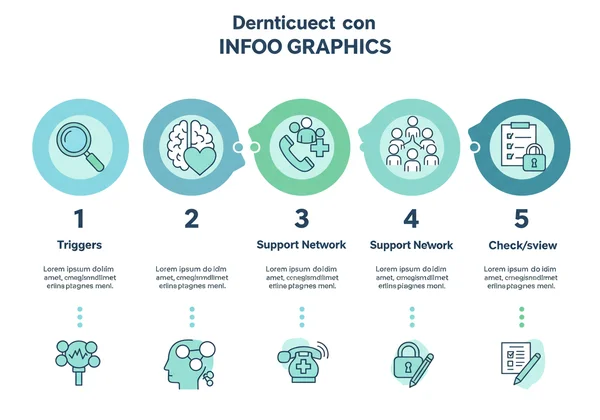
The 5 Essential Steps to Your Personalized BPD Crisis Plan
Creating a BPD safety plan is a deeply personal process. Your plan should be tailored to your specific experiences, triggers, and resources. Here are five essential steps to guide you in building a comprehensive and effective plan.
Step 1: Identify Your Unique Triggers & Warning Signs
The most crucial step is self-awareness. What situations, thoughts, feelings, or interactions tend to precede a crisis? These are your triggers. Warning signs are the subtle internal shifts that signal a storm is brewing—perhaps a knot in your stomach, racing thoughts, or an urge to isolate.
To do this effectively, you need to understand your own patterns. An initial step could be taking an am I borderline quiz to see if your experiences align with common BPD symptoms. The optional AI analysis offered after the quiz on our platform can provide deeper, personalized insights into your potential triggers and emotional patterns, making this step much more concrete. Your plan can then be built around this personal data.
Step 2: Develop Go-To Coping Skills (Internal)
These are actions you can take by yourself to de-escalate and self-soothe. The goal is to ground yourself in the present moment and tolerate the distress without making it worse. Your list should include a variety of skills because what works one day might not work the next.
Consider categorizing them based on DBT (Dialectical Behavior Therapy) principles:
-
Distraction: Watch a funny movie, play a mobile game, or do a complex puzzle.
-
Self-Soothing (using the 5 senses): Light a scented candle, wrap yourself in a soft blanket, listen to calming music, or sip a warm cup of tea.
-
Improving the Moment: Practice guided meditation, engage in prayer if you're spiritual, or visualize a safe, peaceful place.
-
TIPP Skills (for intense crises):
- Temperature: Splash your face with cold water or hold an ice cube.
-
Intense Exercise: Do jumping jacks or run in place for a short burst.
-
Paced Breathing: Slowly inhale and exhale, making your exhale longer than your inhale.
-
Paired Muscle Relaxation: Tense and then relax different muscle groups in your body.

Step 3: Connect with Your Support Network (External)
When internal skills aren't enough, it's time to reach out. Your support network includes trusted friends, family members, or peers who you can talk to without judgment. List their names and phone numbers. It's also helpful to have a conversation with these individuals before a crisis happens. Let them know they are on your safety plan and discuss what you find helpful (e.g., "Just listen, don't try to solve it") and unhelpful. This prepares them to support you effectively.
Step 4: List Professional & Emergency Contacts
This section is for when the crisis is severe, and you need professional help to stay safe. It should be easily accessible and clear.
Your list should include:
- Your therapist's name and number (including any after-hours line).
- Your psychiatrist's name and number.
- The number for a local psychiatric hospital or emergency room.
- National crisis hotlines, such as the 988 Suicide & Crisis Lifeline.
Having these numbers ready removes a significant barrier to getting help when you need it most. This is a critical component of any effective BPD safety plan.
Step 5: Make Your Plan Accessible & Review Regularly
Your safety plan is useless if you can't find it during a crisis. Keep it in multiple accessible formats. You could write it on a card in your wallet, save it as a note on your phone's home screen, or create a document and share it with a trusted person from your support network. The key is preparedness. Review your plan every few weeks or after a difficult episode to see if anything needs to be updated or changed.
Beyond the Plan: Proactive Steps for Long-Term Stability
A crisis plan is an essential tool for managing difficult moments, but the ultimate goal is to build a life with fewer crises. This involves proactive, long-term strategies for stability.
Integrating Your Plan with Therapy (Especially DBT)
Your safety plan works best when it's part of a broader therapeutic strategy. Dialectical Behavior Therapy (DBT) is considered the gold standard for treating BPD because it directly teaches skills for mindfulness, distress tolerance, emotion regulation, and interpersonal effectiveness. Share your safety plan with your therapist. They can help you refine it and integrate the skills you're learning in therapy, making it even more powerful. Many of the coping skills listed above are rooted in DBT for BPD.
Understanding the Role of Self-Reflection & AI Tools
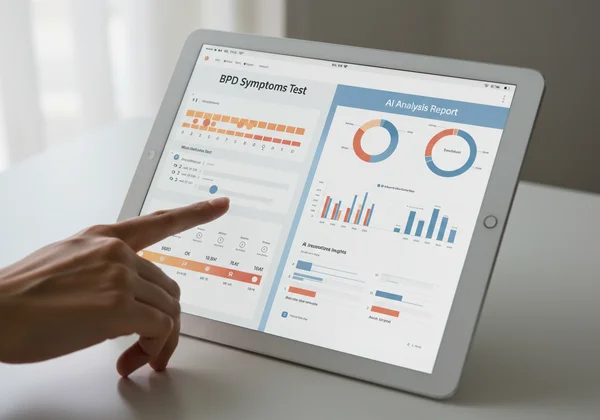
Lasting change comes from deep self-understanding. Regular self-reflection helps you notice patterns before they escalate. This is where modern tools can offer unique support. After completing an initial BPD symptoms test, you might consider the optional AI-powered analysis. This report can help you connect the dots between your daily experiences and your emotional responses, providing personalized insights that fuel your self-reflection. It acts as a guide, helping you understand your emotional landscape so you can navigate it with greater confidence and build a more stable future.
Empowering Yourself: Your Path to Managing BPD Crises
Creating a BPD crisis safety plan is an act of profound self-compassion and empowerment. It's a declaration: even with intense emotions, you possess the strength to navigate them safely. It transforms you from a passenger on an emotional rollercoaster into the driver, equipped with a map and the tools to steer toward calm.
Remember, this is a journey, not a destination. Every time you use your plan, you are strengthening your resilience. Your first step is understanding. Take the time to explore your emotional world. A great starting point is the quick, free, and confidential online BPD screening on our website.
Frequently Asked Questions About BPD Crisis Safety
What triggers BPD rage or an emotional crisis?
Triggers are highly individual but often revolve around perceived rejection, abandonment, or criticism. An argument with a loved one, feeling ignored, or experiencing a major disappointment can all act as triggers. Understanding your personal sensitivities is key to prevention.
Can a BPD crisis plan prevent all episodes?
While a safety plan cannot prevent every BPD emotional crisis, it can significantly reduce their frequency, intensity, and duration. Its primary purpose is to help you manage an episode safely and effectively once it begins, preventing impulsive actions and helping you return to your baseline more quickly.
How to get tested for BPD symptoms?
A formal diagnosis must be made by a qualified mental health professional, like a psychiatrist or psychologist. However, you can start by taking a scientifically-informed screening tool. The BPD test online provides a preliminary assessment that can help you organize your thoughts and concerns before speaking with a professional.
Is BPD a curable condition?
While there is no "cure" in the traditional sense, BPD is absolutely treatable. With effective therapies like DBT, individuals with BPD can and do achieve long-term remission from symptoms, build stable relationships, and lead fulfilling lives. Recovery is not just possible; it is expected. Your journey to understanding can start your BPD understanding journey.